How Blackout Curtains Help Beat Dubai's Harsh Sun & Heat
Dubai's summer doesn't just bring light — it delivers radiant heat through glass that overloads your AC, fades your furniture, and makes west-facing rooms nearly uninhabitable. Here's the science of how the right blackout curtain changes that.
A common misconception about blackout curtains: that their only purpose is blocking light for sleep. In Dubai, this misses the more important function. Light blockage and heat blockage are different properties — but in the case of a quality blackout curtain, you get both simultaneously, and in the UAE context, the thermal benefit may matter more than the light benefit for many homeowners.
This article is specifically about the thermal and energy performance of blackout curtains in Dubai — the science behind how they work, what fabric specification delivers the best result, and how to install them in a way that actually captures the full benefit. If you're looking for the full buying guide — room-by-room advice, styles, and AED pricing — our complete blackout curtains guide covers all of that.
1. Dubai's Heat Problem Is a Glass Problem
Modern Dubai construction defaults to floor-to-ceiling glass for aesthetic reasons — the view, the sense of space, the daylight. This creates a structural thermal challenge that no amount of AC can fully overcome without addressing the glass itself.
Single-pane glass — still common in many Dubai apartments built before 2015 — has almost no thermal resistance. It transmits approximately 85–87% of solar radiation directly into the room as heat. Double-glazed units improve this, but even quality double-glazing transmits 40–60% of solar energy in Dubai's peak irradiance conditions. The glass is effectively a solar panel pointing into your living room.
Uncontrolled Heat Gain
Solar radiation passes through glass unimpeded, converting to radiant heat inside the room. The room temperature near the glass can be 5–8°C higher than the thermostat set point, forcing the AC to run continuously to compensate. West-facing rooms in summer become uncomfortable regardless of the set temperature, because the radiant heat from the glass surface acts faster than convective cooling from the AC vents.
Intercepted & Reflected
Blackout fabric — particularly acrylic-coated or foam-backed fabric with a light-coloured reverse side — intercepts solar radiation at the glass surface and either absorbs it into the fabric mass or reflects it back outward. The radiant heat entering the room is significantly reduced. The AC can maintain the set temperature with less continuous effort, particularly during peak afternoon hours on west-facing exposures.
Stand one metre in front of a large west-facing window at 3pm in July with no curtain — the radiant heat from the glass is palpable even if the AC is running. Close a quality blackout curtain and that radiant warmth disappears within minutes. This isn't anecdotal; it's the direct effect of blocking the radiative heat transfer from the glass surface. Convective cooling from AC vents can reduce air temperature but cannot address radiant heat directly. The curtain can.
2. How Blackout Fabric Intercepts Solar Heat
The thermal performance of a blackout curtain depends on two mechanisms working together — and understanding both helps you choose the right fabric for your specific window situation in Dubai.
Solar radiation passes through glass as shortwave radiation. When it strikes a surface — the floor, furniture, or a dark curtain — it converts to longwave heat radiation. A blackout curtain positioned close to the glass intercepts this conversion point: it catches the shortwave radiation before it reaches room surfaces, then releases the heat slowly back toward the glass rather than into the room interior. The lighter and more reflective the backing fabric, the more effectively it bounces shortwave radiation back toward the glass and outward.
A curtain hung close to the glass traps a layer of air between the fabric and the glass surface. This air gap acts as a thermal buffer — reducing the rate at which heat from the hot glass surface convects into the room. The more completely the curtain seals around the window (top, sides, and bottom), the more effective this air pocket becomes. This is the same principle as double glazing — a trapped air layer resisting heat transfer — but created by the curtain installation rather than the glass unit.
The practical implication: a blackout curtain works thermally through both mechanisms simultaneously, and the installation quality — how well the curtain seals around the window frame — determines how much of the second mechanism you capture. A curtain with gaps at the sides delivers radiation interception but loses most of the convective air-gap benefit. This is why the professional measurement and installation process matters for thermal performance, not just aesthetics.
3. Thermal Performance by Fabric Type
Not all blackout fabrics deliver the same thermal performance. The construction and backing determine the heat reduction you actually achieve:
White or silver acrylic backing reflects shortwave radiation most effectively. Best thermal performer for west-facing Dubai windows. Slightly stiffer drape — not for luxury formal rooms but ideal for bedrooms and functional spaces.
Foam backing absorbs and dissipates heat rather than reflecting it. Good thermal performance, slightly softer drape than acrylic-back. Avoid in bathrooms or humid kitchens where foam can degrade over time.
Three bonded fabric layers provide light block without a coating. Good thermal performance from the air gap effect and fabric mass, but less radiation reflection than coated options. Best all-round fabric for most Dubai rooms.
The pile of velvet traps a micro-air layer within its structure, adding insulation beyond the convective curtain gap. Higher thermal mass than polyester alternatives. Best for rooms where aesthetic quality matters alongside performance. See our velvet curtains range.
Thin foam backing on a lightweight face fabric. Some heat reduction but degrades quickly in Dubai's climate — foam can yellow and delaminate within 2–3 years, losing both thermal and light-blocking performance.
The reverse side of a blackout curtain — the side facing the glass — has a significant effect on thermal performance. A white or silver backing reflects shortwave radiation back toward the glass; a black or dark backing absorbs it and re-radiates it as longwave heat in both directions. For Dubai's intense solar irradiance, always specify a light-coloured backing (white, cream, or silver) on any blackout fabric being used for thermal purposes. This is a specification detail that ready-made products never mention — but our site team confirms it for every custom order.
4. Which Windows Matter Most — and When
Dubai's solar path creates very different heat loads depending on which direction a window faces. Prioritising the right windows for blackout curtain installation delivers the most meaningful thermal improvement per AED spent:
West-Facing
Peak solar exposure 1pm–sunset in summer. The highest radiant heat load of any orientation in Dubai — direct afternoon sun at low angles penetrates deeper into the room than morning sun. Rooms facing west become the most uncomfortable without intervention. Coated blackout fabric with light-coloured backing is non-negotiable here.
South-West Facing
Combines south midday exposure with west afternoon exposure — solar load peaks from 11am through to 6pm in summer. Common in many Dubai apartment towers due to diagonal orientations. Same specification as pure west: coated blackout essential.
East-Facing
Morning sun from 6am, fading by midday. Less radiant heat than west — the sun angle is higher and exposure duration shorter. Still significant enough in summer to require blackout treatment in bedrooms. Triple-weave without coating is usually sufficient for thermal purposes on east-facing windows.
South-Facing
Midday sun — high angle in summer (Dubai is at 25°N, sun is nearly overhead). Exposure is intense but shorter in duration per day than west. Blackout treatment recommended for living rooms with large south-facing glass, particularly in lower floors where the sun angle is more penetrating.
North-West Facing
Late afternoon exposure only — milder than pure west. Still benefits from blackout treatment in bedrooms and home offices where afternoon glare affects screens or sleep. Triple-weave without coating is usually sufficient thermal specification.
North-Facing
Minimal direct sun exposure year-round in Dubai (sun is always to the south at this latitude). North-facing rooms receive reflected and diffuse light rather than direct solar radiation — significantly lower heat gain. Blackout treatment for sleep quality rather than thermal performance.
5. Real Energy Saving Estimates for Dubai Homes
Precise DEWA bill savings depend on many variables: your apartment's total glass area, glazing specification, existing AC efficiency, set temperature, and how many hours per day the curtains are closed. The table below gives realistic estimates based on typical Dubai residential scenarios:
These estimates assume curtains are closed during peak heat hours (11am–6pm on the relevant facing windows) and open at other times. The savings are real but they should not be the primary justification for a blackout curtain investment — the comfort improvement is the primary benefit, and energy saving is a meaningful secondary one.
A fully fitted set of coated blackout curtains for a 2-bedroom Dubai apartment's west-facing windows typically costs AED 1,400–2,400 installed. At an estimated AED 130–240 monthly saving during the 6-month summer peak period, the payback period is approximately 12–24 months in pure energy terms — before accounting for the comfort value and furniture protection benefits. For a 5-year stay in an apartment, this is an investment that pays for itself and then continues delivering.
6. UV Protection: The Furniture Damage Angle
Solar radiation arriving through Dubai's windows contains significant ultraviolet (UV) energy — the portion of the spectrum responsible for fading, bleaching, and degrading organic materials. This is a problem that heat-control arguments sometimes miss entirely, but for anyone who has invested in quality furniture, flooring, or artwork, it may be the most financially significant function of blackout curtains after the fabric itself.
First visible signs
Light-coloured fabrics and upholstery near west or south-facing windows begin showing subtle colour shift — slightly yellowed whites, faded pastels. Often attributed to cleaning products initially.
Flooring impact
SPC flooring, parquet, and carpet within 1.5–2m of large south or west windows shows visible lighter zones where direct sun falls. The contrast with shaded areas becomes noticeable. Replacement cost: AED 80–200 per m².
Upholstery damage
Sofa fabric facing a west window shows clear fading on sun-exposed cushions vs shaded sides. Leather begins drying and cracking at sun-exposed surfaces. Replacement or reupholstery: AED 2,000–8,000+.
Structural damage
Artwork fades; printed artworks lose vibrancy; wooden furniture lightens on exposed surfaces; painted walls near windows show UV bleaching distinct from the rest of the room. Cumulative replacement cost can exceed the original furnishing investment.
Blackout curtains block 99–100% of UV radiation when closed. Closing them during the 4–6 peak sun hours on the relevant facing windows protects everything in the room from this cumulative damage — effectively extending the life of every furnishing near the window by years. For a villa furnished at AED 200,000+, this is a significant and calculable financial argument.
7. Why Installation Quality Determines Thermal Performance
This is the detail most guides miss entirely. A blackout curtain with excellent thermal-rated fabric will underperform significantly if it's installed with gaps — and most ready-made curtains, hung on rods sized to the glass width, have gaps on every side.
Track width: extends 20–25cm beyond the glass on each side. When closed, the curtain overlaps the wall surface, eliminating the side gap where hot air and radiant heat bypass the fabric entirely.
Drop: curtain starts at ceiling or as high as possible above the window, and ends at the floor with 1–2cm clearance. Eliminates the top and bottom gap where the convective air pocket is broken.
Centre overlap: where two panels meet in the middle, they overlap by at least 5–8cm on a ring system, or are a single panel on a single-draw track. No gap at the centre means no light blade and no heat bypass.
Wrong installation: track sized to glass width, panels meet exactly at the centre with no overlap, drop is 20–30cm short of the floor. Each of these gaps is a thermal bypass — solar energy enters the room around the curtain regardless of how good the fabric is.
During our free site visits, we measure specifically for thermal performance — track width, drop, centre overlap, and whether the ceiling mounting position allows a full seal at the top. A thermally correct installation on a mid-range fabric will outperform a premium fabric on a poorly fitted track every time.
8. Combining With Other Treatments for Maximum Effect
Blackout curtains are one component of a complete window thermal strategy. Combined with other treatments, the effect compounds:
- Blackout curtain + sheer on dual track: The sheer curtain on the front track provides daytime light diffusion and privacy; the blackout on the rear track closes during peak heat hours to deliver thermal and UV protection without darkening the room completely when not needed. Read our sheer curtains guide for the full layering system.
- Blackout curtain + roller blind in reveal: A sunscreen roller blind inside the window reveal cuts solar gain even before light reaches the curtain, while the blackout curtain behind handles the remaining radiation and provides the convective air gap. The combined effect can approach 40–45% heat gain reduction on west-facing glass.
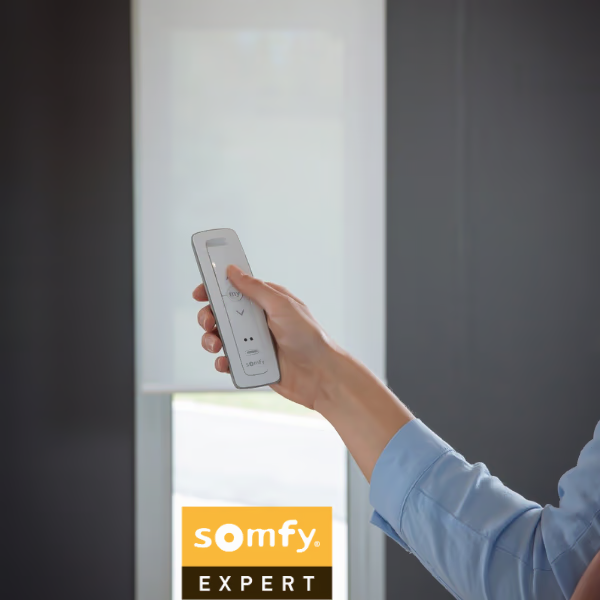
- Motorization for schedule automation: A motorized blackout curtain programmed to close automatically at 1:55pm and reopen at sunset delivers the full thermal benefit without relying on anyone being home to operate it. On a villa with 12+ windows, automated thermal management becomes genuinely significant in energy terms. The Somfy TaHoma system with a sun sensor can trigger curtain closure automatically when solar irradiance exceeds a set threshold — entirely hands-free.
- Blackout curtain + external awning: An external awning is the most thermally effective single intervention — blocking solar radiation before it reaches the glass eliminates both the radiation and the glass heating effect entirely. Combining an awning with an internal blackout curtain on the same window is the maximum practical thermal specification for a Dubai villa.
9. Cost vs Savings — The AED Case
For coated blackout curtains specified for thermal performance on Dubai's west-facing windows:
A standard 2BR Dubai apartment typically has 4–6 curtain panels on west or south-west facing glass. A full thermal blackout installation runs AED 1,200–3,000 for the recommended specification — a payback of 12–18 months from energy savings alone, before accounting for furniture protection and comfort value. For a villa installation at AED 4,000–12,000 total, the payback is 18–30 months against energy savings, and significantly shorter when furniture protection is included in the calculation.
Related Products & Pages
Frequently Asked Questions
Do blackout curtains really reduce heat in Dubai?
Yes — quality coated blackout curtains can reduce solar heat gain through glass by 25–33% in Dubai conditions. The effect is most pronounced on west-facing windows during peak afternoon hours (1pm–6pm in summer). The key is both fabric specification (acrylic-back with white reverse for maximum reflection) and installation quality — curtains must extend well beyond the window frame to eliminate the gaps where heat bypasses the fabric.
Which blackout curtain fabric is best for heat reduction?
Acrylic-back coated blackout fabric with a white or silver reverse delivers the best thermal performance — the light-coloured backing reflects shortwave solar radiation back toward the glass rather than absorbing it. For bedrooms and non-formal rooms, this is the correct specification for west-facing Dubai windows. For rooms where aesthetics matter more, backed velvet provides the next best thermal performance while delivering luxury appearance.
How much can I save on my DEWA bill with blackout curtains?
For a 2-bedroom apartment with west-facing glass, correctly installed coated blackout curtains typically save AED 130–240 per month during the 6-month summer peak. For larger villas with substantial west-facing glass area, savings of AED 350–650 per month in summer are realistic. The payback period on installation cost is typically 12–24 months from energy savings alone.
Do blackout curtains protect furniture from fading in Dubai?
Yes. Blackout fabrics block 99–100% of UV radiation — the primary cause of furniture fading, leather cracking, flooring discolouration, and artwork bleaching. In Dubai's intense sunlight, unprotected furniture near west-facing windows shows visible fading within 12–18 months. Closing blackout curtains during peak UV hours essentially eliminates this cumulative damage, extending the life of every furnishing in the room.
Why does installation quality affect thermal performance?
Gaps at the sides, top, and bottom of a curtain are thermal bypasses — heat enters the room around the curtain regardless of how good the fabric is. A thermally correct installation requires a track that extends 20–25cm beyond the glass on each side, a drop that reaches from ceiling to floor, and a centre overlap of 5–8cm between panels. This is what our free site visit measures specifically for each window.
Do blackout curtains work better than roller blinds for heat?
Properly fitted blackout curtains generally outperform roller blinds for heat reduction because curtains extend beyond the window frame, eliminating the edge gaps that blinds fitted inside the reveal cannot avoid. The best thermal result combines both — a sunscreen roller blind inside the reveal and a blackout curtain beyond the frame on the same window — capturing the benefits of both mechanisms simultaneously.
Creative Vision Global
Dubai's window treatment specialists since 2010. Over 5,000 homes fitted across UAE — with deep expertise in thermal specification for Dubai's demanding climate. 4.7-star Google rating. About us →
Cut the Heat — and the Bill
Book a free site visit. We assess your windows' orientation, specify the right thermal fabric, and install to the dimensions that actually work — not just look right.