
The conversation around sustainability in UAE interiors has shifted over the last few years. What used to be a niche consideration — a box to tick on a green building certification form — is now a genuine purchasing priority for a growing number of Dubai homeowners and commercial fit-out clients. The reasons aren't hard to understand. UAE Vision 2031 includes significant sustainability targets. LEED and Estidama certifications on new builds actively reward sustainable interior specifications. And the generation of Dubai residents now making interior decisions is the first to have grown up with sustainability as an expected consideration, not an optional extra.
Window treatments sit in an interesting position in this shift. They're not typically the first category people think about when considering sustainable interiors — but they're among the higher-impact choices, both in terms of what goes into making them and in terms of their functional contribution to a building's energy performance. A well-specified eco roller blind made from rPET fabric isn't just using recycled material — in Dubai's climate, it's also reducing the AC load on the room behind it every day for the next decade. That double benefit is worth understanding properly. Our eco-friendly range is at the sustainable window treatments page.
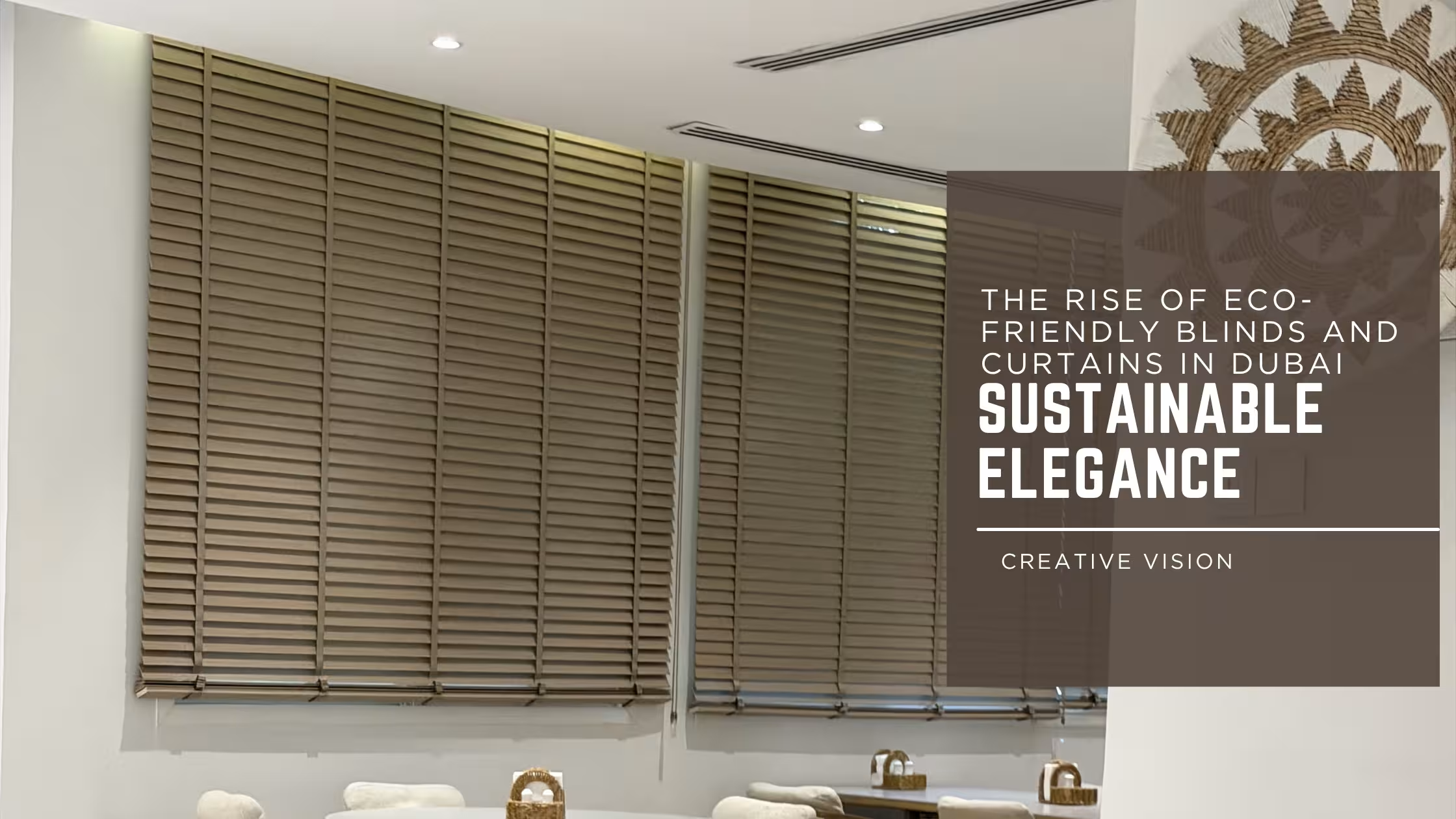
1. Why Sustainable Window Treatments Are Gaining Ground in Dubai
Three things are driving this simultaneously, and they're reinforcing rather than independent.
UAE Policy Direction
The UAE Net Zero by 2050 strategic initiative and Dubai's own carbon reduction targets have created a policy environment that actively rewards sustainable building choices. LEED certification on new commercial and residential developments, the Abu Dhabi Estidama system, and the Dubai Green Building Regulations all assign credit points to sustainable interior material choices — including window treatments. Developers and building owners pursuing certification have a financial incentive to specify greener window treatments.
The AC Energy Argument
Dubai's air conditioning accounts for a disproportionate share of both household and commercial energy consumption — in some estimates, over 70% of total building energy use in summer months. Any window treatment that meaningfully reduces solar heat gain is directly reducing this energy consumption. A quality sunscreen blind reducing solar heat gain by 60–70% isn't just comfortable — it's doing real energy work. In Dubai specifically, the sustainable window treatment argument starts here.
Design Has Caught Up
The earlier generation of eco window treatments was often beige, limited in range, and felt like a concession. That's changed significantly. rPET roller blind fabrics are now available in the same colour and texture range as standard polyester. FSC-certified wooden blinds look identical to their non-certified equivalents. Organic linen curtains are — arguably — more desirable aesthetically than many conventional alternatives. Sustainable specification no longer requires sacrificing design quality.
Consumer Demand Is Real
A growing proportion of Dubai's residential and commercial interior clients are asking specifically about sustainable options — not as a secondary consideration but as a primary brief requirement. Interior designers specifying for LEED-certified projects and for clients with genuine sustainability commitments need suppliers who can provide credible eco alternatives with documented certifications. That demand is pulling supply in a clear direction.
2. The Four Eco Material Categories — Honestly Assessed
Not all eco claims are equal. Here's an honest assessment of the four main sustainable material categories available in the Dubai window treatment market — what each one actually means, what it performs like, and where the caveats are.
"The most sustainable window treatment in Dubai is the one that performs well enough to last ten years. A cheap blind that needs replacing every three years isn't sustainable regardless of what it's made from."
3. Greenwash Alert — Claims to Question
The sustainable interiors market in Dubai, as in most markets, contains a spectrum from genuinely credible to purely marketing. These are the claims worth examining more carefully before accepting at face value.
4. Certifications That Actually Mean Something
Third-party certification is what converts a marketing claim into a verifiable standard. These are the certifications worth asking about when specifying eco-friendly window treatments in Dubai.
We only make eco claims for products where we can supply the relevant certification documentation on request. If a supplier can't provide a certificate number for their eco claim, that claim is unverified. Ask us for certification documentation on any product in our sustainable range — it should be available immediately, not something we have to "check on."
5. The Energy Performance Argument — Dubai's Strongest Case
In most climates, the sustainability case for window treatments centres primarily on material origin — what the blind is made from. In Dubai, the energy performance dimension is equally or more significant, because the impact of a window treatment on AC energy consumption is large and measurable.
That last row is the honest one. An rPET sunscreen blind and a standard polyester sunscreen blind at the same Solar Factor and openness factor perform identically in energy terms. The environmental benefit of rPET is in the production phase — using recycled rather than virgin material — not in the in-use energy performance. The biggest energy saving comes from specifying the right blind type and Solar Factor for each window's orientation, and from motorization that allows the blind to respond to actual solar conditions throughout the day.
Which means the most sustainable window treatment decision in Dubai is often not which eco fabric to choose, but whether to install a high-performance sunscreen on a south or west-facing window at all. A poorly specified conventional blind that does nothing to reduce solar heat gain is less sustainable in total lifecycle terms than a well-specified standard blind that reduces AC consumption by 20% for ten years, even if the former claims eco credentials and the latter doesn't.
Eco material + right performance specification = best outcome. An rPET blind at the correct Solar Factor for your window orientation is both environmentally responsible in its material origin and energy-efficient in its daily operation. That's the specification we'd recommend for a Dubai homeowner prioritising both aesthetics and sustainability.
What to avoid: an eco-labelled blind at a higher Solar Factor than your window needs (prioritising the eco claim over performance), or a cheap non-certified blind at a good Solar Factor that needs replacing in three years (short lifespan negates the energy saving). Longevity is part of sustainability. A blind that lasts twelve years beats two blinds that each last six, even if the shorter-lived one has slightly better eco credentials.
6. Best Eco Options Room by Room
Living Room
The most impactful eco choice for a Dubai living room. rPET sunscreen at the right Solar Factor reduces both AC load and material environmental impact simultaneously. Choose a light colour with a silver backing on south and west exposures for maximum solar reflection.
Bedroom
rPET blackout fabric in a cassette system for a fully sustainable, fully dark bedroom. Alternatively, organic linen curtains with a blackout lining layer — the linen face has GOTS certification and the blackout lining handles the performance. The layered approach gives you eco credentials plus genuine Dubai sleep quality.
Kitchen
Waterproof is non-negotiable in a Dubai kitchen. Some waterproof roller blind fabrics now include recycled content — ask specifically. OEKO-TEX certification is particularly relevant here as VOCs from kitchen blind materials circulate in cooking air. A certified low-VOC waterproof blind is the correct eco-conscious kitchen specification.
Home Office
A motorized rPET sunscreen in a home office is both the eco and the practical specification. The motor allows the blind to respond to actual sun position throughout the day — better for screen use and better for energy management than a static position set once in the morning.
Bedroom / Yoga / Wellness
Spaces where indoor air quality and natural materials are the primary concern. Bamboo blinds (FSC-certified where possible) or GOTS-certified organic linen curtains are the most natural-material-forward choices. Best on north-facing windows where UV exposure is lower — natural fibres degrade faster on direct-sun exposures in Dubai.
Children's Room
Indoor air quality matters most in children's rooms — OEKO-TEX Standard 100 certification ensures no harmful substances in the fabric. rPET blackout cassette for genuine darkness and a verifiable recycled-content credential. Cordless operation is essential in any child's room regardless of eco specification.
7. Honest Limitations in UAE Conditions
The sustainability conversation in window treatments sometimes glosses over genuine performance trade-offs. In Dubai's specific conditions, some of these matter more than they do in more temperate markets.
A blind that lasts twelve years in UAE conditions is more sustainable than an eco-labelled blind that fails in four and needs replacing three times. Before optimising for eco-material credentials, confirm that the chosen material is genuinely durable in your specific window's conditions. For high-UV south and west-facing windows in Dubai, rPET or treated synthetic fabrics consistently outlast natural alternatives — which makes them the more sustainable choice over a full lifecycle, even without the headline eco credentials of bamboo or organic cotton.
8. Eco Doesn't Mean Beige — Design Options
One of the most persistent misconceptions about eco window treatments is that sustainable means neutral, limited, or compromise. It doesn't — at least not any more.
rPET roller blind fabrics are now available in the full colour spectrum of standard polyester sunscreens — from bright whites through warm creams and greige tones, to charcoals, navies, and deep greens. The texture and drape is identical to standard polyester. Unless someone tells you the blind is made from recycled bottles, you wouldn't know from looking at it. That's exactly where the category needs to be.
Organic linen and linen-blend curtain fabrics suit the Japandi, biophilic, and natural-material interior aesthetics that are currently among the most popular directions in contemporary Dubai design. In this context, the eco credential isn't a concession — it aligns perfectly with the design intention. A certified organic linen wave curtain in a warm flax or sage green on a ceiling-mounted track is a strong design choice in its own right, not a compromise.
FSC-certified wooden blinds look identical to their non-certified equivalents across the full species and stain range. Natural bamboo blinds have a texture and warmth that suits the right interior beautifully. And Cradle-to-Cradle certified products are increasingly appearing in the premium rather than the budget segment — sustainable specification and premium design are moving in the same direction.
The strongest visual alignment between eco materials and contemporary Dubai design is the biophilic interior trend — spaces that incorporate natural materials, organic textures, and connection to the natural world. Bamboo blinds, organic linen curtains, and FSC timber blinds fit this aesthetic naturally. If you're designing a biophilic room, the eco specification and the design brief are the same decision.
9. Cost Guide in AED
Eco-friendly window treatments carry a modest premium over their non-certified equivalents — typically 10–25% depending on material and certification level. The premium is real and reflects genuine additional costs in sustainable sourcing, certification maintenance, and in some cases recycled material processing. It does not typically reflect a performance difference in the finished product.
| Specification | AED per m² | vs standard equivalent |
|---|---|---|
| rPET sunscreen roller blind (GRS certified) | AED 140–250 | +10–20% vs standard polyester sunscreen |
| rPET blackout roller blind (GRS + OEKO-TEX) | AED 180–280 | +15–25% vs standard blackout |
| FSC-certified wood blind (real timber) | AED 200–350 | +10–15% vs non-certified equivalent |
| Bamboo roller blind (natural, FSC) | AED 160–280 | North-facing / interior use recommended |
| Organic linen curtain fabric (GOTS certified) | AED 220–400 per m² fabric | +20–30% vs standard linen blend |
| OEKO-TEX certified curtain lining (blackout) | AED 60–100 per m² | +10–15% vs standard blackout lining |
| C2C or Bluesign certified premium fabric | AED 280–550 per m² | Premium tier — design + sustainability combined |
All pricing includes the blind mechanism or curtain heading and professional installation. For multi-window projects, the per-unit pricing reduces and the premium over standard equivalents often narrows. For an exact written quote with eco-certified fabric options confirmed, book a free site visit — we bring certified fabric samples so you can confirm the look alongside the credential before ordering.
Frequently Asked Questions
What are eco-friendly blinds actually made from?
Eco-friendly blinds in the Dubai market fall into four main categories: rPET fabric (recycled from plastic bottles, performance-identical to standard polyester), FSC-certified timber (sustainably sourced wood, performance-identical to non-certified equivalents), natural fibres such as bamboo, jute, or organic linen (genuinely natural and renewable, but with lower UV resistance in UAE conditions), and low-VOC or Cradle-to-Cradle certified fabrics that prioritise indoor air quality or recyclability at end of life. Each category has different strengths and limitations — the best choice depends on your window's orientation, the room's function, and which aspect of sustainability matters most to you.
Do eco blinds perform as well as standard blinds in Dubai's climate?
rPET and FSC-certified products perform identically to their non-certified equivalents — same Solar Factor, same UV resistance, same durability. Natural fibre blinds (bamboo, jute, linen) have genuinely lower UV resistance than synthetics and are better suited to north-facing or lower-sun exposures in Dubai. An untreated natural fibre blind on a south-facing Dubai window will degrade faster than a quality synthetic alternative. For high-sun exposures, rPET is the most sustainable choice that also maintains full performance in UAE conditions.
How can I tell if a supplier's eco claims are genuine?
Ask for the certification document and certificate number. Legitimate certifications (GRS, OEKO-TEX, FSC, GOTS, C2C, Bluesign) all have verifiable certificate numbers that can be checked on the certifying body's website. If a supplier claims a certification but can't provide documentation, the claim is unverified. Terms like "eco-friendly," "sustainable," and "green" without a third-party certification behind them are marketing language, not standards. Any supplier committed to genuine sustainability should be able to produce documentation for their eco claims immediately and without hesitation.
Is it worth paying extra for eco-certified window treatments in Dubai?
The 10–25% premium is worth it if: you're pursuing LEED or Estidama certification and need documented sustainable material choices; indoor air quality is a priority (OEKO-TEX certified products provide verifiable chemical safety); or sustainability is a genuine purchasing principle rather than a marketing preference. If the primary goal is energy saving, the specification (correct Solar Factor, right fabric type for the window orientation) matters far more than the eco credential — a well-specified standard blind saves more energy than a poorly-specified eco blind. Get the specification right first, then add the eco credential on top.
Can eco blinds contribute to LEED certification in Dubai?
Yes. LEED v4 and v4.1 include credits for low-emitting materials (OEKO-TEX and similar certifications contribute here), for building product disclosure and optimisation (certified recycled content, FSC timber, and third-party certified products all contribute), and for indoor environmental quality more broadly. Window treatments are typically specified under the Materials and Resources and Indoor Environmental Quality credit categories. For a project pursuing LEED certification, ask your supplier for Environmental Product Declarations (EPDs) and the relevant certification documentation — these are what the LEED submission process requires.